How is the transplantation of indoor plants?
Transplantation of indoor plants is carried out under certain conditions. It is important to choose the right pot, a new substrate for a flower and the perfect time to transplant
In natural conditions, the root system of the plant is not limited in space, which you can’t tell about the cultivation of the house. Being in a pot, the plant is forced to live and develop in the soil of a small volume, which means the first thing he needs to ensure is its feed. That is why from time to time there is a containment of indoor plants so that they can continue to delight the owners with their lush flowering and beautiful green.
Rules of transplant
Under what conditions are houseplants need to transplant:
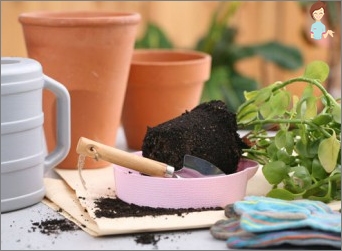 If the ground is completely braided and is permeated with roots;
- If the roots are rotated;
- If the land is in a pot of zakisla, and a rust appeared on her surface;
- If there is a common weakness of the flower: it does not bloom, and the leaves do not grow;
- If the roots began to look out from the drain holes.
Do not hurry to move to the newly acquired instance to the new soil: he needs to give time to come to himself, get used to new conditions. If you are afraid that your new friend is poorly becoming a transplant, you can perform a transshipment, that is, transfer it to a new container along with a closer substrate on the roots.
Release the flower from the old substrate completely recommended only with the complete loss of soil of its nutritional properties, as well as with severe plant diseases. Road Transplanting Road Plants Charts: Perfect Year of the Year for this Procedure – Spring. At this time, they wake up from the winter hook and begin to actively grow.
It is not formed to change the primer and the place of stay of flowers and in the summer, but the in the fall of the transfer of houseplants is not recommended. The same applies to the period of their flowering. If we talk about the soil, then first of all it should be nutritious. One of the conditions for further growth and the development of the flower is the ability to choose the necessary earthy mixture.
Because some plants love the weakly acidic environment, and the other is such a contraindicated. For example, Heliotrope and Calceolaria grow well in the soil rich in lime, but Azalia, heather and Camellia feel it does not matter. For young copies, it is better to choose a lighter soil than for old. Sterilizing the land and drainage, proceed to transplant.
Features of transplanting on the lunar calendar
There is a calendar of the transfers of indoor plants, which prescribes to transport plants from one pot to another at certain days. Considering the phases of the moon, the most suitable days for planting in accordance with the type of flower, the features of its root system, growth, etc.
Due to the lunar calendar of transfers of indoor plants, floweries and gardeners of the whole world have the opportunity to know when it is better to maintain the cherentsy, transplanting bulbous, tuber, curly flowers and t.D.
For example, to hang out floral seeds in April is better than 1, 24, 28 and 29, and rooting the drafts 24 numbers. The most favorable days for transplanting houseplants in June are 5, 22, 23 and 27 numbers. Information on unfavorable days for transplanting days is also contained in this calendar.
How to choose a pot
The container for the flower is selected in accordance with the features of its root system. In any case, the size of the old pot should not be much less than the size of the new. Ideally, a new container must have a diameter, 2-3 cm exceeding the diameter of the previous one.
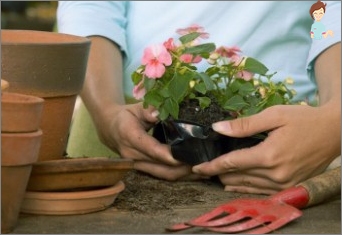 If the roots grow preferably in the horizontal plane, it is necessary to choose a low flat container. Pathicles and cacti latch in the container of a small diameter. Orchids need transparent capacity, since the roots of this plant also need light.
Palm trees need to plant in a high and narrow container, as their roots tend to go deep into the substrate. If you use with old pots when transplanting, they need to be cleaned, remove salts and rust raid and scream with boiling water.
Ceramzite is recommended to be used when transplanting almost all without exception room flowers, But it is necessary to remember that it is impossible to transfer it from the old pot to a new one – it is necessary to purchase fresh.
How to replant
Decompose on the bottom pot of claymzit and pour a little land. Placing the stem inside, start lining the fresh soil from the sides, following the base of the stem 1-2 cm below the rim pot. The substrate must be slightly tamped and tapping along the walls of the capacity so that no emptiness remains.
When transplanting bulbian indoor plants, it is necessary to wait for flowering, cut the arrow after drying, and then put the bulb into the ground up to half, that is, its top should hang over the ground. If the flower is unnecessarily burst, the bulb can be started, and the leaves will die and the plant will die.
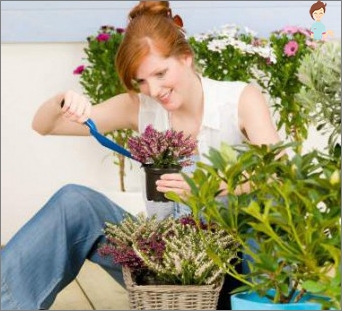 It is important to separate all the subsidiaries, as well as to carry out regular watering and feeding until October of the month. With proper care in February or March, the flower must release a new boom.
The transplant of such a room plant as a monetary tree should not be carried out too often. Only once a few years, when the tank capacity becomes too small, it is transferred to a new pot with fresh soil.
Earth is better to acquire the one that is suitable for cacti. All other actions are no different from those described above, except that the bottom along with the clamisite is recommended to put coins to attract weakening. The fastest tolerates a transplant very well and after some time you can observe the growth of new sheets.
Beautiful and lush flowers!