Sick feet in a child: why and what to do?
Pathology orthopedics. Chronic infections. Violations in the work of the cardiovascular system. Hold legs with a deficiency of vitamins. Mechanical damage. Influenza and ac. Causes of chromotype
Why a little child sick legs? The reasons for this unpleasant phenomenon are quite a lot. Some of them are associated with external factors, others – with internal. To find out where there is a source of pain, you need to talk to the baby.
Childhood
This reason is the most common. Unpleasant feelings arise against the background of high growth rates and active metabolism. Before puberty, the child increases in the growth mainly due to the elongation of the legs, the legs and feet grow intensively. In such places you need good blood circulation.
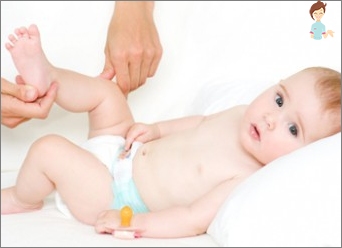 Vessels that feed muscles and bones are wide and can well supply blood growing fabrics, but they are not too elastic. Their tone rises about 10 years. Therefore, they work better with active loads when muscles are involved.
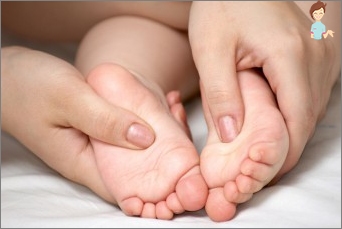
It happens that the leg hurts at night in a child. This is due to the fact that during the recreation period, the tone of the veins and the arteries decreases, blood circulation in fast-growing tissues is reduced, as a result, soreness occurs. To save the baby from these unpleasant sensations, you need to massate the legs, stroke the feet, that is, increase blood flow into the muscles.
Orthopedic pathology
Violations of this sector of medicine are also included in the most common causes. This can include scoliosis, wiring of posture, flatfoot, etc. In this case, the role is played by the shift of the center of gravity. The greatest body pressure is not distributed evenly, and accounted for a certain area (stop, shin, knee, thigh).
Can also break the gait. Orthopedic diseases can be not only acquired, but also congenital. For example, similar symptoms arise in the pathology of the hip joints, osteochondropathy (perthes disease, Ostud-Shlatter disease).
Chronic foci of infections
Causes of pain in the legs can be hidden in a child in the nasopharynk. Diseases such as adenoite, tonsillitis, multiple caries include soreness in their symptoms. In this case, the initial point is prevention measures: you need to visit the otolaryngologist and the dentist in time, treat teeth, follow the hygiene of the mouth.
Sometimes pain is the first sign of developing rheumatism, juvenile rheumatoid arthritis. In some cases, it arises against the background of diseases of the endocrine system: diabetes, adrenal pathologies, parachite gland.
Such illness lead to disorders of bone mineralization. In addition, the first symptom of certain blood diseases are also pain in the limbs, arthritis of ankle and knee joints. It is urgent to turn to the phthisius, if the legs hurt and the child has a positive reaction of Mantu.
Neurocircular dystonia
So-called osselagia most often arise from those who are diagnosed with dystonia on hypotonic type. It is noted that they are more manifested at night. At the same time, discomfort in the field of heart, abdomen, as well as headache, bad sleep, sensation of lack of air.
Congenital Cardiovascular Diseases
Such a symptom is part of the clinical picture with similar problems. Some congenital defects, such as arterial valve or coarctation of aortic, are characterized by poor blood circulation in the limbs. Such children are hard to walk, they periodically stumble, fall, quickly get tired. If you measure the pulse, then it will be forgiven in the hands, and there may be no absent on my feet.
Connecting tissue inferiority
In this case, we are talking about the insufficiency of the tissue, which is part of the heartcard, ligaments and veins. Usually, people with similar congenital developmental anomalies suffer from the hypermobility of joints, flat-painting, scoliosis, varicose veins, width of posture and overstaving the kidneys.
Local pain
If the child sometimes hurt feet feet in their middle part, then the pathology of the foot of the foot. And the unpleasant feelings in the heel point to the stretching of the Achilla tendon, in the finger – on the inflammation of the bags on its outdoor part.
Deficit of useful substances
Upon reaching 3 years, kids often complain about the unpleasant sensations in the calf muscles. Such a phenomenon is usually associated with a lack of phosphorus and calcium in the growth zone of bone tissues. Similar situation arises in pregnant women, since they have calciums are excreted in large quantities of the body.
In a child, this may be associated with phosphorus, potassium and calcium deficiency due to poor assimilation of elements (secondary rickets).
Injuries
 If the muscles or joints of the child have sharply sick, then, as a rule, it indicates damage to the tissues, for example, stretching. If, in addition to the above symptom, there is edema, redness or local temperature increase, you need to urgently contact a specialist.
The swollen and reddened joint requires a thorough study, since the likelihood of infections in it (septic arthritis).
Also similar symptoms may indicate the development of severe systemic disease (youth rheumatoid arthritis, still disease). Septic arthritis in the absence of therapy leads to an irreversible damage to the joint, and the illum illness is to deterioration.
If a child has a shot and hurt the bones of the legs, there is general ailment, then it is necessary to contact the medical institution, as it can be the initial stage of the stylist or leukemia.
Why influenza and ores provoke the nunning pain
The symptoms of such diseases must necessarily include the lubrication of the joints, the decline of the forces, the feeling of everything body. This phenomenon does not apply to abnormal, so it does not require increased attention. It will pass with a cold. At the initial stage you can use paracetamol.
Sytter disease
Such pathology in the overwhelming majority of cases is diagnosed in older children and adolescents. It is characterized by acute pain in the front of the knee joint, in a place where the ber bone (holing) connects with the tendon of the knee. At the same time, it is observed not only during the day, when driving, but also at night, at rest.
There is an unpleasant hypersensitivity. It is worth noting that medicine still cannot accurately indicate the cause of the development of pathology, but it is noted that it affects most often athletes.
Cheeky
If the baby has just bruised his leg and began to lick, then, as a rule, there is nothing terrible. Another thing is when the gait is broken without visible. There may be uncomfortable shoes, nail in the sole, ingrown nail or inflammation of the finger, injury / inflammation of ankle / knee.
Attention should be paid to any echoing and twisted place. First you need to gently bend and disperse the thigh, then the knee and ankle. In some cases, lameness arises against the background of strong emotions, for example, with strong excitement or stress.
It is worth introducing bedding for one day. If the baby continues to lick even a day, without consulting the doctor can not do. Also, for help you need to contact if the child occasionally swell and sore legs.
Bruises, injury
These factors belong to the most common in children of middle and older school age. They are very active and often stretch muscles and ligaments. Such problems do not require urgent intervention, but you can use anti-inflammatory ointment.
When need to contact the doctor:
- There are suspicions on the bone fracture or another serious injury;
- Lameness for no reason for several days;
- Inflammation and redness of the ankle, knee or hip joint.
Conclusion
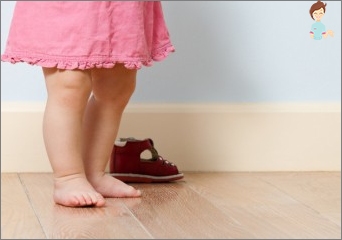 Parents must constantly observe the kid, and during sleep, and when waking. You also need to pay attention to shoes. She should have a hard sole, sufficiently sit on the leg and be in size.
Do not limit kids in movements, as activity contributes to their growth. They also need a full nutrition: an abundance of vegetables and fruits, fermented milk products, fish and t. NS.
If the parents have suspicions or anxiety about a particular phenomenon, do not tighten with a visit to the doctor!