Why not enough breast milk?
When moms first arrive breast milk? What are the reasons for the lack of milk? Agalaktia, hypigalactium and galathery: causes and treatment. Other breastfeeding problems
All young mothers are interested in the question: when breast milk comes after childbirth? It is not surprising that this topic concerns the parents, because the development and health of the newborn baby depends in many ways from natural feeding.
When breast milk appears after childbirth?
 On the first day after the browser, a colostrum appears, which before that could be allocated to childbirth. It is usually very small, but in the future the secretion increases, although each woman has its amount to retire. Full milk can come gradually, for example, most often for 4-5 days after childbirth, it is already quite a lot, or arrive sharply and suddenly.
Milk glands at this point can hardly harden and significantly increase in volume. They, as a rule, become painful, and expanded veins are transmitted through tense skin. Sometimes the temperature rises.
Some bad well-being can be observed for one or two days. If you break the dairy glands well, completely empty, then normal lactation will be established. Sometimes milk appears much later. This is usually a bad phenomenon of primary women. His secretion can begin a week after the birth of a child or even after two.
As soon as the first tide of milk occurred, its secretion will begin to grow continuously and reaches the maximum between 10 and 20 weeks. In the first week, about 200-300 ml of milk is produced during the day. After that, the lactation will remain on the level achieved until the end of breastfeeding.
The duration of breastfeeding depends on many factors, including the individual characteristics of the organism and the structure of the breast. In addition, the mother can always decide independently when it is time to overcome the child from the chest.
After birth, for some reason, milk did not come: complications in breastfeeding
Over the past few years, more and more complaints of young mothers do that they lack milk or there is no. The absence of its secretion in official medicine is called Agalactia and is extremely rare.
Typically, the cause of pathology is the underdevelopment of the breast, but sometimes it is associated with the physical exhaustion of a woman or as a result of a mental shock. If the agalactium is caused by the last two reasons, then when creating normal conditions, milk can still appear.
Usually, when a woman speaks of the lack of lactation, it means a decrease in milk generation. The reasons for the deficit can be very different, starting by physical and ending with psychological. For example, very often little milk comes after childbirth under malnutrition (poorly balanced diet), overwork, lack of sleep, social instability, troubled atmosphere in the family.
When a woman has a small child, she gives him almost all his time, so it really needs help and support for loved ones. When the newborn care is entrusted to it, and other home affairs, it may be simply not enough time to rest and full sleep.
This mode immediately affects its state not the best way. Accordingly, the lactation suffers. Therefore, asking why there is no milk after childbirth, you should first estimate your lifestyle.
That is why in the treatment of hypoglactics (insufficient milk generation) show: full sleep (at least 7 hours); Balanced nutrition, including the use of 1 l of milk per day, diluted with 1 l of hard tea, or similar amount of ferocular products. In some cases, psychotherapy is included in the course of treatment.
Folk recipes that promote milk production?
 Many women to enhance milk generation, if it is not enough, resort to well-known popular recipes. For example, the decoction of nettle or medicinal collection. To prepare a decoction of 20 g of dried leaves of the plant poured a liter of hot boiled water and insist for a while.
Take such a medicine on the tablespoon three times a day. To prepare the collection, you need to take 25 g of dill, fennel, anise fruit, oreganic herbs. All ingredients are crushed to powder condition. On a teaspoon of raw materials need a glass of hot water. All mixed and insist, and then drink the resulting fluid two or three times a day by 200 ml.
There is another people’s recipe how to effectively flourish milk after childbirth: to eat bread with Tminom and sour cream in which Tmin was cooked. The latter is prepared at the rate of 1 h. L. Seeds at 150-200 ml sour cream. Ingredients are mixed and boiled only 3 minutes.
Recommendations of traditional medicine
An important role in the elimination of hypoglactics is played by the feeding of the baby, which must be strictly observed. In addition, when the child poins, you need to carefully write milk so that there are no drops. After such an event, hot shower will be useful, especially on the chest area.
If a woman has little milk from the birth of crumbs, it is recommended to increase the amount of feedings. In such a situation, the child must eat at least 7 times a day. At the same time, night feedings are not excluded. It is worth noting that at a time you need to give both chest, and not one, as in the usual situation.
Igalactere – reverse side of the medal
Medical treatment, physiotherapy procedures, acupuncture,. Lactation pathology is igalatte. In medicine, this term denotes spontaneous allocation of milk. Minor expiration is usually observed before feeding or during such, but from the free chest is physiological, quite normal phenomena.
But the Galactorian is characterized by the fact that the flowing occurs even between feeding. In rare cases there is a continuous selection, strongly irritating gentle skin of the chest and nipples. In this case, the total volume of liquid is often small. Galactoree can be combined with hypoglactic.
However, the spontaneous flow is associated with neurosis, therefore, a major role in the treatment of the disease plays a full-fledged sleep and balanced nutrition. The complex of treatment includes both medicines and physiotherapeutic procedures.
Other breastfeeding problems
It can happen that milk comes regularly, the child sucks everything, but does badly adds in weight. In this case, the doctor suspects the inferiority of fluid. Usually has a blue tint and watery taste. When analyzing, the lack of nutrients is detected: fats, proteins and carbohydrates.
To correct the situation in the diet, you need to add appropriate products:
- With a lack of proteins – eggs, cottage cheese, meat;
- With fats – oil, cream, flour;
- With a shortage of carbohydrates – sugar syrup, confectionery.
Children can lose their maternal milk because of the irregular shape of the nipples, which is not trying to correct during pregnancy. Elongated, flat, infantile, split nipples can interfere with natural feeding.
During pregnancy, they need to pull them out, after the milk came, they became convex, and the baby could easily adapt. Otherwise, it is necessary to use special linings, and after feeding to make a pulling massage, decay the remains of the milk pump.
The so-called tight chest also prevents normal lactation. In this case, there is a lot of milk, but after childbirth, the child cannot suck him. To make it easier for him, just a few. But if such a reception is ineffective, the doctor prescribes massage and quartz irradiation.
Complications arise in the event that, if during the pregnancy period, the woman did not prepare the chest, and after the appearance of the kid, he fed him at first. In this case, the cracks of nipples inevitably appear.
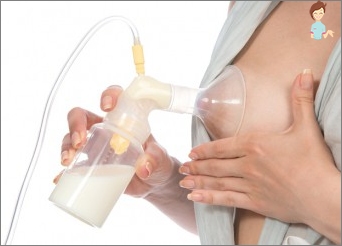 They can cause severe pain, bleed. During feeding, use the lining or give intact breasts. After feeding, if there is a lot of milk left, it is fixed to prevent mastitis.
Cracks process:
- Taninov ointment (2%);
- Silver nitric acid solution (2-5%) or methyl blue (3%)
- Formalin alcohol (2%);
- Vitamin A;
- If the treatment did not help and began inflammation, the nipples are treated with a synthesic emulsion, calangean juice, plantain juice, a solution of furacin (0.2%) or a Balm of Shostakovsky;
- Perhaps the doctor will appoint ultraviolet local irradiation.
With any problems associated with breastfeeding, you need to immediately contact the pediatrician or a gynecologist who will appoint you adequate treatment.