Is it worth taking «Nimesil» during pregnancy?
Can I drink «Nimesil» during pregnancy. Indications for use. Contraindications. Side effects. Features of application «Nimesil» during pregnancy and lactation
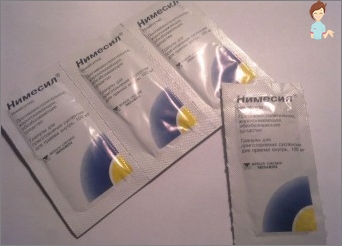
«Nimesil» – This is a drug drug belonging to the recent generation of anti-inflammatory funds. The main active ingredient of this fund – nimesulide. Produce it only in the form of a powder with a pleasant orange flavor, which is subject to breeding warm boiled water.
Is it possible to drink the drug «Nimesil» during pregnancy?
This medicine is able to block the second type cyclooxygenase – this is the main mechanism of nimesulide.
 Due to this, the drug has several therapeutic effects at once: anti-inflammatory, antipyretic and anesthetic.
2.5 hours after consumption (on average) there is a maximum nimesulide concentration in the blood. The remedy is metabolized in the liver, and then together with biliary is outputting. Based on this, it is prescribed with caution when the liver function is reduced, because the circulation of the active substances of the drug in the body is significantly increased.
And in the period of the child’s hatching period, the load on absolutely all organs and systems is so increased, so the liver will be much heavier than metabolization.
Indications for destination «Nimesil»
 It is mainly used if there are pains of different origin, as well as increasing body temperature. Often used in neurological muscle and articular, dental pains.
However, during pregnancy, this tool is not recommended for use, because its impact on the fruit is not yet fully studied. Replaced replaced «Nimesil» on safer analogs.
This tool does not affect the cause of the appearance of pain syndrome, that is, it only provides symptomatic action – it will be stopped by disease.
Therefore, in all cases, it is recommended to find out the root cause.
Contraindications for use
As already mentioned, the effect of active substances of the drug on the fruit is not studied, therefore it is advisable not to use it as a medicament during pregnancy.
«Nimesil» Sometimes it is used for pregnancy in early terms, but in minimal quantities and short time. However, it is strictly forbidden to drink after 32 weeks. This is due to the fact that this agent, like all other anti-inflammatory, provokes premature closure of arterial duct.
There are a number of contraindications associated with cyclocloxygenase blockade in tissues and organs.
This refers to:
 Bronchospasm, urticaria, history, caused by acetylsalicylic acid or other NSPIDs, including nimesulide;
- Hepatotoxic reactions to the main active ingredient of the drug;
- Cannot drink «Nimesil» together with drugs with potential hepatotoxicity, for example, with paracetamol and other NSAIDs and analgesics;
- Inflammatory intestinal pathology in the period of exacerbation (etc. Nonspecific ulcerative colitis, Crohn’s disease);
- Postoperative period with an aorticonial shunting;
- Fever accompanying infectious inflammatory diseases;
- The combination of the recurrent polyposis of the nose / outfill sinuses, bronchial asthma with the individual intolerance of aspirin and other NSAIDs;
- Ulceal duodenal and stomach disease during the period of exacerbation, ulcers in history, bleeding and perforations in the gastrointestinal tract;
- Cerebrovascular or other bleeding in history, diseases accompanied by bleeding;
- Severe violations in the rolling system of blood;
- Severe renal failure, hypercalemia;
- Liver failure and other outdoor liver pathologies;
- Age up to 12 years;
- Alcoholism, drug addiction;
- Individual intolerance to the components of the drug.
Side effects
If compared «Nimesil» With other non-steroidal anti-inflammatory agents, this drug can have significantly less side effects.
The number of these includes:
 Headache, dizziness;
- Nausea, it is possible to vomiting;
- Violations of the blood formation system associated with a decrease in the number of platelets, leukocytes and erythrocytes;
- Gastrointestinal bleeding;
- Disorders in the urinary system, in particular, problems with urination.
We can say that side effects can manifest themselves in any of the body systems and at different times of pregnancy.
«Nimesil» can be replaced by a number of other preparations with a similar principle of action. This includes analgin, a group of spasmolitics, anti-inflammatory non-steroids with proven security for the future child (etc. Indomethacin, Diclofenac). It is worth noting that indomethacin is often used in obstetrics and gynecology in the threat of interruption of gestation in the period from 16 to 32 week.
Features of the use of drug «Nimesil» during pregnancy and breastfeeding
 This drug, like other NSAIDs, inhibit the synthesis of prostaglandins, can have a negative impact on the course of pregnancy, the development of the embryo, lead to a violation of the kidney function (renal failure), pulmonary hypertension, risk of bleeding, the fall of uterine countertility, peripheral edema.
That is why it is not recommended to be taken during pregnancy, in particular in early time, as well as during lactation.
The risk of the appearance of side effects can be significantly reduced using the minimum effective dose of the drug and a short course.
Interaction with other pharmacological preparations
Risk of bleeding or gastrointestinal ulcers increases significantly when used with glucocorticosteroids.
Similarly affect the body simultaneous use with selective inhibitors (etc. Fluoksetin) and means warning the formation of thromboms.
 It is not recommended to combine it with anticoagulants, for example, warfarin, but if there is such a need to regularly check the blood coagulation indicators.
Nonteroidal anti-inflammatory drugs can be taken with diuretics, but they weaken the effect of the latter.
Nimesulide temporarily slows down sodium removal under the influence of furosemide, as well as potassium, respectively, and diuretic effect.
As you can see, the drug can be taken exclusively after the recommendation of a specialist and under his supervision. Health to you and your child!